
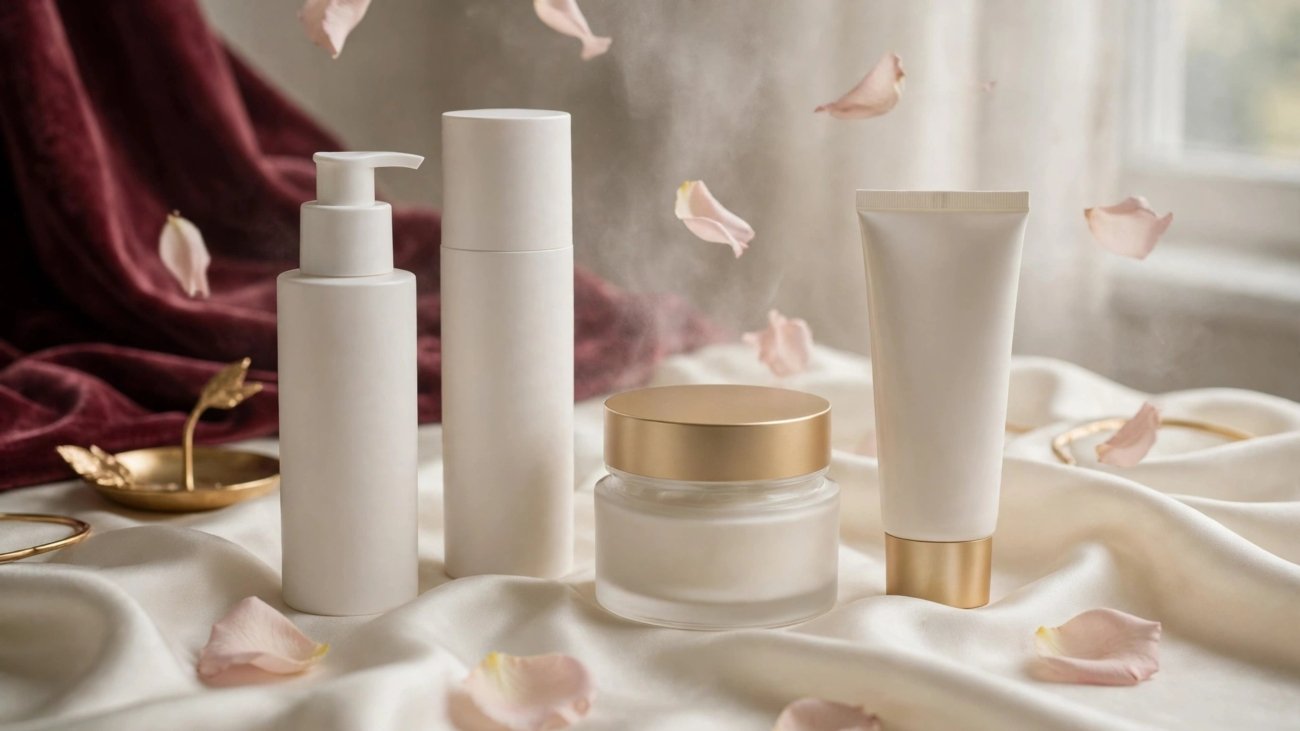
Plain cleanser, moisturizer and sunscreen on cream silk with rose petals, skincare for sensitive skin in Pakistan

Skincare for Sensitive Skin: Best Products in Pakistan

Quick answer: Skincare for sensitive skin should be short and fragrance-free. Choose a gentle cleanser, a plain moisturizer and a sunscreen, and add nothing else for the first few weeks. Test each new product on a small spot twice daily for seven to 10 days. Stop at the first redness, itching or stinging.

The most common advice for sensitive skin is also the most misleading: “look for hypoallergenic.” That word sounds like a promise. It isn’t one.

If you’re searching for the best skincare products in Pakistan, sensitive skin changes the rules. The best product isn’t the most famous one. It’s the one your skin tolerates, and this guide shows you how to find it.

What counts as sensitive skin?

In everyday language, sensitive skin is skin that stings, burns, itches or turns red easily when you use certain products. That’s my plain description, not a medical diagnosis. Only a doctor can tell you whether you have a skin condition.

Conditions like eczema and rosacea can also make skin very sensitive. The American Academy of Dermatology advises people with these conditions to choose fragrance-free products and test them first. If you suspect a condition, see a dermatologist before you buy anything new.

Which skincare labels can you trust?

Labels are where most sensitive skin mistakes start. Here is what the AAD says about the common ones.

LabelWhat to know
Fragrance freeThe label dermatologists suggest if fragrance irritates your skin
UnscentedBe cautious. These products may still contain fragrance-related ingredients
Hypoallergenic, natural or cleanNot a guarantee. Even products with these labels can cause a skin reaction
Non-comedogenicMeans the product is made not to clog pores, and the AAD suggests it for sensitive, rosacea-prone skin

These points come from the AAD’s guidance on how to test skin care products. The AAD also warns that plant-based, botanical ingredients may still contain fragrance-related ingredients. So “natural” and “gentle” on the front tell you very little.

How do you choose skincare for sensitive skin?

Here is the checklist I’d use before adding anything to the cart. I call it the five-point label check. It’s my own method, built from the AAD advice above.

  1. Fragrance free: the label says “fragrance free”, not only “unscented”.
  2. Short list: fewer ingredients mean fewer suspects if your skin reacts.
  3. No strong actives at the start: the AAD notes that ingredients such as retinol and glycolic acid can irritate skin, especially sensitive skin.
  4. Readable label: the seller shows the ingredient list, the batch code and the expiry date.
  5. Patch test passed: you’ve tested it before it goes on your face.

If a product fails even one point, leave it for now. Our guide to the skincare ingredient list shows how to read that label in two minutes.

What should skincare for sensitive skin look like day to day?

Keep it boring. Boring is good for sensitive skin. Three steps are enough.

StepWhat to chooseWhat to avoid
CleanserA gentle, fragrance-free formula, used with lukewarm waterScrubs and strongly scented washes
MoisturizerA plain, fragrance-free moisturizerMany layers of different creams
SunscreenBroad spectrum, SPF 30 or higher, water resistant, with no fragranceSkipping it on cloudy days

The AAD advises a broad-spectrum, SPF 30 or higher, water-resistant sunscreen. For rosacea-prone skin, it also suggests avoiding sunscreens that say “unscented”. For the basics that suit every skin type, see our guide to the best skincare products in Pakistan.

How do you patch test sensitive skin properly?

Many websites say a 24-hour test is enough. The AAD recommends something longer: apply the product to a test spot twice daily for seven to 10 days. Some reactions need days to appear, and a very short test can miss them.

Follow the steps in our guide to patch test skincare, and test one product at a time. If you react but can’t tell which ingredient caused it, talk to a board-certified dermatologist. You may need a medical patch test.

Does Pakistan’s weather change what you should use?

Yes. Sweat, heat and dust can irritate skin that is already reactive, and cold, dry air can make it feel tight. In sticky months, our guide to skincare for humid weather explains how to lighten your routine. In winter, the winter skincare routine shows what to swap.

If your skin is also shiny, read our guide to skincare for oily skin, because harsh washing can irritate sensitive skin too.

How do you buy skincare for sensitive skin online?

When you can’t read the label in your hand, ask for it. Request a clear photo of the back label, check the ingredient list, and look for a batch code. Then inspect the parcel before you pay. Our guide to identifying original cosmetics in Pakistan explains the full checklist.

When should you see a dermatologist?

See one if your skin reacts to several products, if redness, burning or swelling keeps returning, or if you think you may have eczema or rosacea. A dermatologist can recommend gentle products and, if needed, arrange medical patch testing. A new cream can’t replace that.

FAQs about skincare for sensitive skin

What is the best skincare for sensitive skin?

A short routine of a gentle cleanser, a plain moisturizer and a sunscreen, all fragrance-free. Add products one at a time, and test each for seven to 10 days before using it on your face. The best product is the one your skin tolerates.

Is “hypoallergenic” safe for sensitive skin?

Not necessarily. According to a board-certified dermatologist quoted by the AAD, even products labelled “hypoallergenic”, “natural” or “clean” can cause a skin reaction. Test every new product, whatever the label says.

What is the difference between fragrance-free and unscented?

“Fragrance free” means no fragrance ingredients are added. “Unscented” can mean the fragrance has been covered up, so the product may still contain fragrance-related ingredients. If fragrance irritates you, choose fragrance free.

Should sensitive skin avoid retinol and acids?

Be careful. The AAD notes that ingredients such as retinol and glycolic acid can irritate skin, particularly sensitive skin. If you want to try one, patch test it, add it alone, and ask a dermatologist first.

How long should you patch test a product?

The AAD suggests twice a day for seven to 10 days, using your normal amount of product. Stop at the first redness, itching, stinging or swelling, and don’t use that product again.

Can you wear makeup on sensitive skin?

Yes, but test makeup the same way as skincare, because some makeup can irritate sensitive skin. Introduce one product at a time, and take it off gently at night without scrubbing.

Building a gentle routine? Browse our skincare collection and check each product page for details.

Skincare bottle and cream jar on a rose marble tray with falling petals for a patch test skincare guide

Patch Test Skincare: How to Do It Safely at Home

Quick answer: To patch test skincare, put a small amount of the new product on a small patch of skin, use it the way you normally would, and repeat twice a day for 7 to 10 days. Stop at the first redness, itching or stinging. Only then use it on your whole face.

Patch test skincare before you commit to a full bottle. It takes a little patience. However, it can save you from a week of red, itchy skin.

Most people skip the patch test skincare step. I understand why. A new serum arrives, it smells lovely, and you want to use it tonight. Waiting ten days feels silly. One bad reaction on your whole face feels much sillier.

What is a patch test for skincare?

A patch test means trying a product on a small area of skin first. That is the whole idea behind patch test skincare habits: if your skin dislikes the product, the reaction stays small. You see it early, and you stop.

It has limits, though. A patch test can show an early irritation or allergic reaction. It can’t predict every problem, such as how your skin feels after weeks of use. Think of patch test skincare habits as a smoke alarm, not a guarantee.

How do you patch test skincare step by step?

The American Academy of Dermatology suggests applying the product to a test spot twice a day for 7 to 10 days. Use your normal amount, and leave it on for as long as you normally would. You can read the details in the AAD guidance on testing skin care products.

Here is how that looks in real life:

  1. Wash your hands and clean the test spot.
  2. Pick a spot you won’t rub or wash off. The inner forearm works for most people.
  3. Apply a small amount, in the same thickness you’d use normally.
  4. Leave it for your usual time. A moisturizer stays on. A cleanser gets rinsed after your normal wash time.
  5. Repeat twice a day for 7 to 10 days.
  6. Check the spot each time before you reapply.
  7. If the skin stays calm, try the product on one small area of your face before using it everywhere.

Step 7 is my own habit, not an AAD rule. Your face is often more sensitive than your arm, so a second small test makes sense.

What does a bad reaction look like?

Watch for any of these signs on the test spot:

  • Redness
  • Itching
  • Stinging or burning
  • Swelling
  • Small bumps or a rash

If you see one, stop using the product, rinse the area with water and don’t test it again. If swelling spreads or you feel unwell, get medical help. The AAD also notes that a dermatologist can do a medical patch test if you need to find out what is causing a reaction.

Which products should you patch test first?

Not every product needs the same effort. Here is a simple guide.

ProductPatch test?How to do it
Moisturizer, serum, sunscreenYes, full 7-10 daysThese stay on for hours, so a slow reaction has time to show
Face wash, body washYesApply, leave for your usual wash time, rinse, repeat twice daily
Lipstick, powder, base makeupYesTest on the forearm first, then a small area of your face
Eye makeupYes, with extra careEyelids are delicate, so stop at the first sign of irritation
Perfume, body mistYesUse a small amount on a small spot, away from your face

What is the one-lane rule?

Here is the framework I’d use. Imagine your routine as a road with one test lane. Only one new product can drive in that lane at a time.

If you add a second product, you can’t tell which one caused the problem. Your skin turns red, and now you’re guessing. So finish one patch test skincare round, then start the next.

It’s slower. It’s also the only way to know for sure. If you bought several new products together, test the stay-on ones first, because they spend the most time on your skin. Our guide to the best beauty products to buy online explains how to keep a first order small enough to test properly.

Why does a patch test skincare routine matter more when you order online?

When you buy online, you can’t read the pack, smell the product or ask a shop assistant before you pay. Also, a parcel that travelled in summer heat may have changed on the way.

The US Food and Drug Administration says to throw away cosmetics if the colour or smell changes. So check the product before you test it. If it looks or smells wrong, don’t patch test it.

Does Pakistan’s weather change how you patch test?

Slightly, yes. The patch test skincare steps stay the same, but a few details change. Summer sweat can wipe a test spot clean. Choose a place that stays dry, and try not to rub it.

Sunlight matters too. If you test on a sun-exposed spot and the skin turns red, you can’t tell whether the product or the sun caused it. Pick a covered or shaded area instead, such as the inner forearm.

What patch test mistakes should you avoid?

Most patch test skincare mistakes come from rushing. These are the common ones:

  • Testing three products at the same time.
  • Stopping after one hour and calling it safe.
  • Trusting words like “natural” or “hypoallergenic”. The FDA has no formal definition for “natural”, and it does not define “hypoallergenic”.
  • Testing on skin that is already irritated or sunburnt.
  • Ignoring a small sting because “it must be working”. Stinging isn’t proof of anything, so I’d stop.

FAQs about patch test skincare

How long should you patch test skincare?

The American Academy of Dermatology suggests testing twice a day for 7 to 10 days. Use your normal amount and leave the product on for as long as you normally would. Some reactions take days to appear, so a very short test can miss them.

Where is the best place to patch test a skincare product?

Choose a small spot you won’t rub or wash off, such as the inner forearm. Avoid sun-exposed skin, because sun redness can confuse the result. For a face product, you can try one small area of your face after the arm test passes.

Is a 24-hour patch test enough?

A 24-hour test can catch quick reactions, but it can miss slower ones. That is why the AAD suggests 7 to 10 days. If you’re in a hurry, a short test is better than none. However, the longer test is more reliable.

Do you need to patch test makeup and sunscreen too?

Yes, if the product is new and stays on your skin. Sunscreen, base makeup, lip products and powders all qualify. Test one product at a time, so you know which one is responsible if your skin reacts.

What should you do if your skin reacts?

Stop using the product, rinse the area with water and don’t use it again. If the swelling spreads, if the reaction is severe, or if you feel unwell, get medical help. Keep the packaging so a doctor can see the ingredient list.

Does a passed patch test mean a product is safe for everyone?

No. It only shows how your skin handled that product during the test. Your skin can still react later, and other people may react differently. Keep using the product with care, and stop if irritation appears.

Want to start a skincare routine slowly? Browse our skincare collection at your own pace.